
Dentures, Crown & Bridge
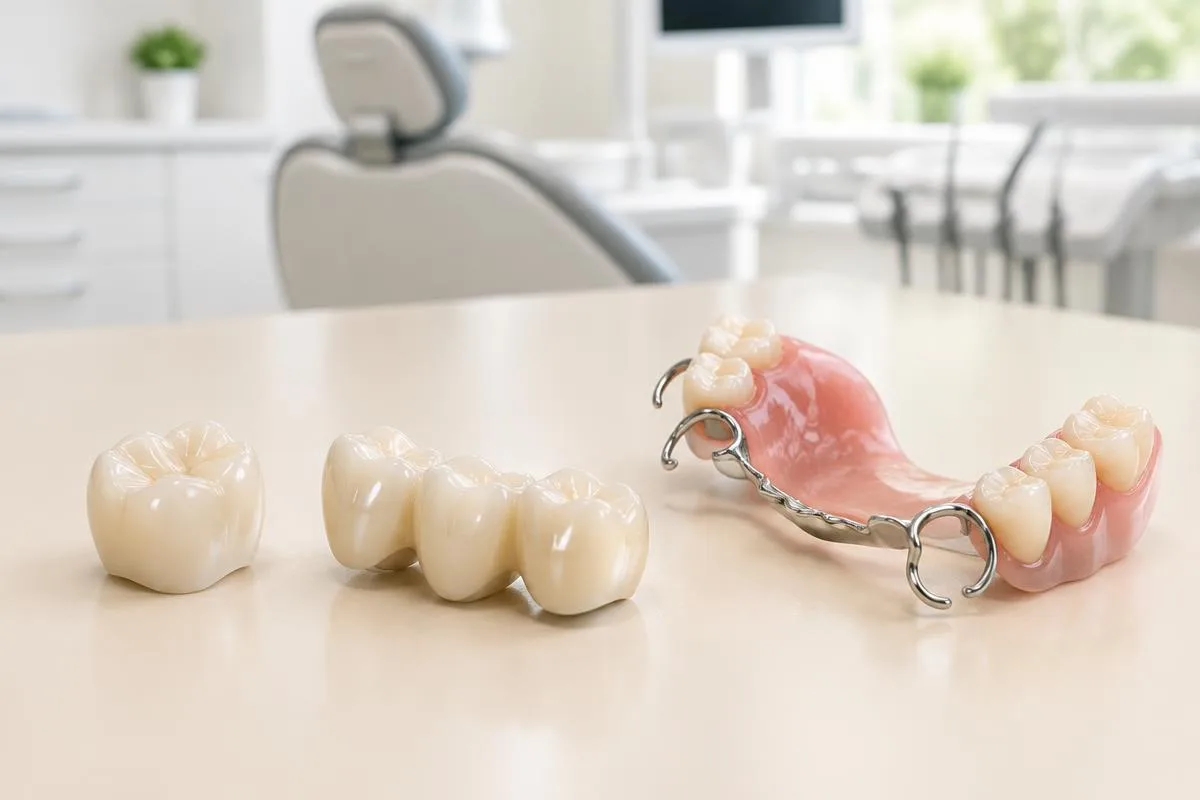
Crowns protect damaged teeth, bridges fill the gap left by missing ones, and dentures replace several or all teeth. We help you compare these options and design a result that looks natural and fits comfortably.
Understanding your options
About Dentures, Crown & Bridge
A crown covers a tooth that is cracked, worn or has lost significant structure, restoring its strength and appearance. A bridge uses the teeth on either side of a gap to anchor one or more replacement teeth, while dentures are removable replacements for several or all teeth. Crowns and bridges are usually fitted over two or more visits; dentures are shaped to your mouth over several appointments. Suitability depends on the health of the remaining teeth, gums and bone, and implants are sometimes discussed as an alternative or to add stability.
Who may benefit
- Patients with a cracked, worn or heavily filled tooth
- People missing one or more teeth, from a single gap to a full arch
- Patients with an old, damaged or loose crown, bridge or denture
Suitability is determined through an individual dental assessment.
Care options to discuss
Your recommended care depends on the findings of your examination. Not every option is appropriate for every patient; referral may be needed for some treatments.
- ✓Porcelain and ceramic crowns
- ✓Dental bridges for one or more missing teeth
- ✓Full and partial dentures
- ✓Repair or replacement of damaged crowns, bridges and dentures
- ✓Adjustments and relines for a comfortable fit
- ✓Guidance on cleaning around bridges and dentures
Why patients choose us
- • Restores strength and shape to damaged teeth
- • Fixed and removable replacement options
- • Made to match your natural smile
Bring your insurance or Canadian Dental Care Plan (CDCP) details. Coverage, approval requirements and out-of-pocket costs vary by treatment and plan. Ask for an estimate before proceeding.
Your care journey
What to expect
Assess and compare
An examination and any needed imaging help determine which option — crown, bridge or denture — suits your mouth, health and goals.
Prepare and record
Supporting teeth are shaped where needed, impressions or digital scans are taken, and a temporary restoration may protect the area in between visits.
Fit and adjust
The finished crown, bridge or denture is fitted, your bite is checked and adjusted, and you receive guidance on keeping it clean and comfortable.
Looking after your smile
Brush twice daily and clean between your teeth every day, including under a bridge using floss threaders or the cleaning aids your dentist recommends. Remove dentures after eating and brush them daily with a soft brush and denture cleaner; keep them moist in water or a soaking solution when not worn, and clean your gums and any remaining teeth every day. Some sensitivity is common after treatment; contact the clinic if your bite feels uneven, pain worsens, or a restoration becomes loose or uncomfortable.
Common questions
How long do crowns and bridges last?
With good home care and regular checkups, they often serve well for many years, but no restoration is guaranteed for life. Habits such as grinding, decay at the margin or gum disease can shorten their lifespan, and they may eventually need repair or replacement.
Will dentures change how I speak or eat?
New dentures take time to get used to, and speech or chewing may feel different at first. Practice and follow-up adjustments help. Persistent sore spots or looseness should be checked rather than endured.
How do I choose between a bridge, an implant and a denture?
Each has different requirements for the supporting teeth, gums and bone, along with different costs, timelines and daily care. An assessment can compare the options for your situation before you decide.
This information is general guidance, not a diagnosis or a substitute for an individual examination. Treatment choices, risks, costs and results vary from person to person.